Arcadia is a tooled method devoted to systems & architecture engineering, supported by Capella modelling tool.
It describes the detailed reasoning to
It can be applied to complex systems, equipment, software or hardware architecture definition, especially those dealing with strong constraints to be reconciled (cost, performance, safety, security, reuse, consumption, weight…).
It is intended to be used by most stakeholders in system/product/software or hardware definition and IVVQ as their common engineering reference and collaboration support.
Arcadia stands for ARChitecture Analysis and Design Integrated Approach.
A series of online documents to dive into the principles and concepts of Arcadia:
Arcadia is a system engineering method based on the use of models, with a focus on the collaborative definition, evaluation and exploitation of its architecture.
This book describes the fundamentals of the method and its contribution to engineering issues such as requirements management, product line, system supervision, and integration, verification and validation (IVV). It provides a reference for the modeling language defined by Arcadia.
Jean-Luc Voirin, leader of the creation of the Arcadia method, along with some of the leaders on developing and deploying MBSE Arcadia & Capella practices in Thales. From right to left: Pierre Nowodzienski, Jean-Luc Voirin, Juan Navas, Stephane Bonnet, Frederic Maraux, Gerald Garcia, Philippe Fournies, Eric Lepicier.
Architecture as prime engineering driver
Arcadia, a model-based engineering method
Noticeable features of Arcadia
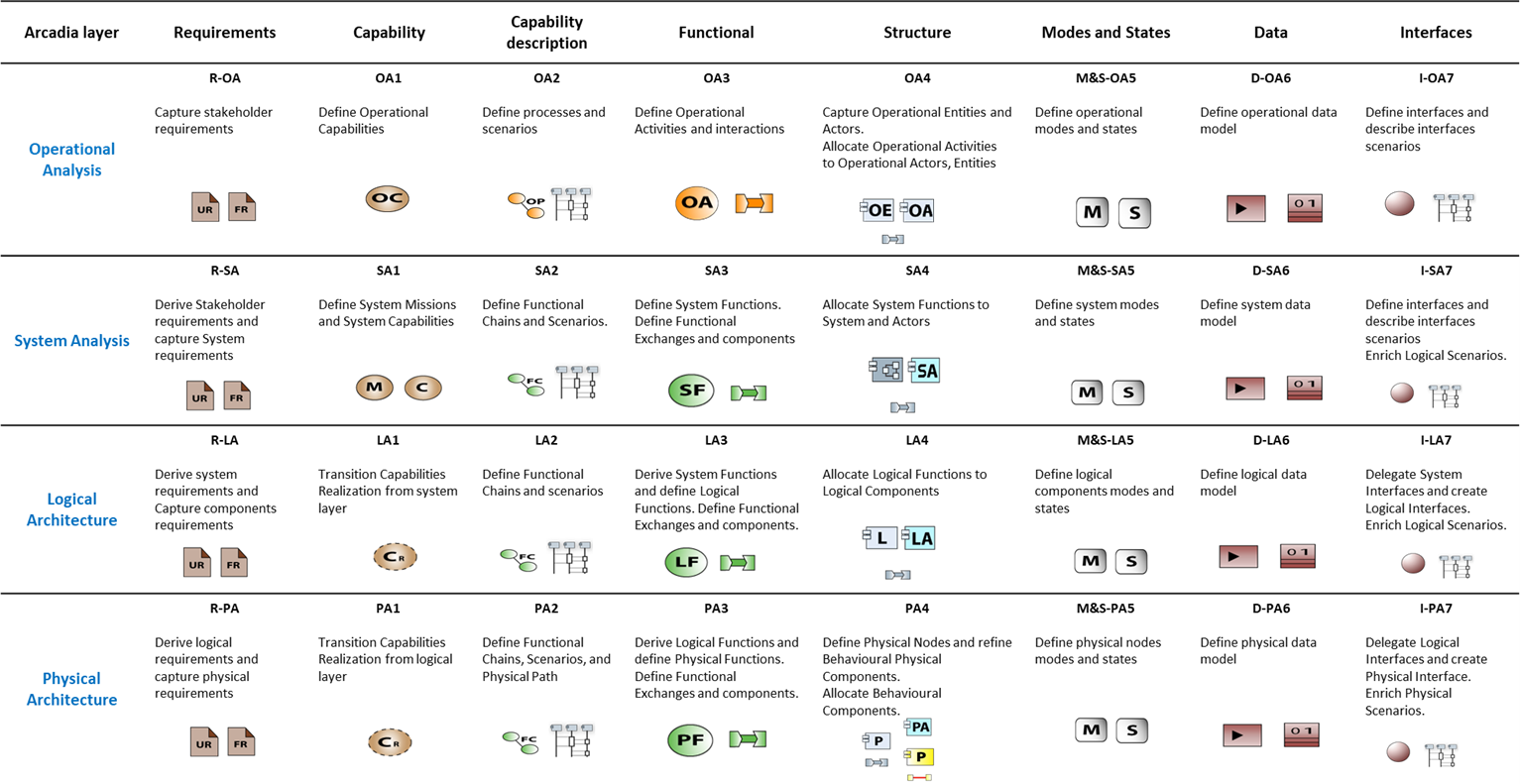
Definition of the Problem - Customer Operational Need Analysis
Formalization of system requirements - System Need Analysis
Development of System Architectural Design - Logical Architecture (Notional Solution)
Development of System Architecture - Physical Architecture
Formalize Components Requirements - Contracts for Development and IVVQ
Co-Engineering, Sub-Contracting and Multi-Level Engineering
Adaptation of Arcadia to Dedicated Domains, Contexts, Etc.
Equivalences and Differences between SysML and Arcadia/Capella
: While the base unit typically lacks native Wi-Fi, it is frequently used with third-party smart plugs to integrate with Alexa or Google Home for voice control and automated scheduling. Functional Use Cases
Furthermore, the unregulated nature of the V2 offers an immediacy of power that regulated mods cannot replicate. For squonkers and mech purists, keeping an aging Dragon Box-V2 running is a badge of honor. aging dragon box-v2
Unlike the sleek, sterile AI hubs of the modern day, the Dragon Box was built to age. Its processors were laced with organic polymers that shifted and hardened over time, creating a physical record of every calculation it had ever performed. It didn't just store memories; it grew scars. The "Dragon" moniker came from the way the internal cooling fans would roar and vent steam when the system was pushed to its limits, a rhythmic huffing that sounded suspiciously like a beast in a deep slumber. : While the base unit typically lacks native
"If you bypass the Box, you bypass the pressure regulation," Miller said, his eyes snapping open. "It’s not just a switch, Sia. It’s the brain. Without the Box, the Dragon is just a bomb." Unlike the sleek, sterile AI hubs of the
Miller snorted. He closed the heavy steel panel of the Box-v2 and latched it tight. A small puff of dust escaped the seal.