Cozmix has collected some nice apps for all astronomy lovers. You will find both very accessible apps, as well as apps for the more advanced.
Have you ever wondered what the whole Universe looks like? With the myriad Galaxies, including our Milky Way galaxy, containing billions of Stars, and our own Solar System? See the Earth from above, including the International Space Station and an Astronaut in orbit. What does his Brain look like? What about its Neural Network, all the Neuron Cells and their DNA? Have you seen an Electron Cloud surrounding the tiny Atomic Nucleus, filled with Protons and Neutrons? And what lies at even smaller scales?
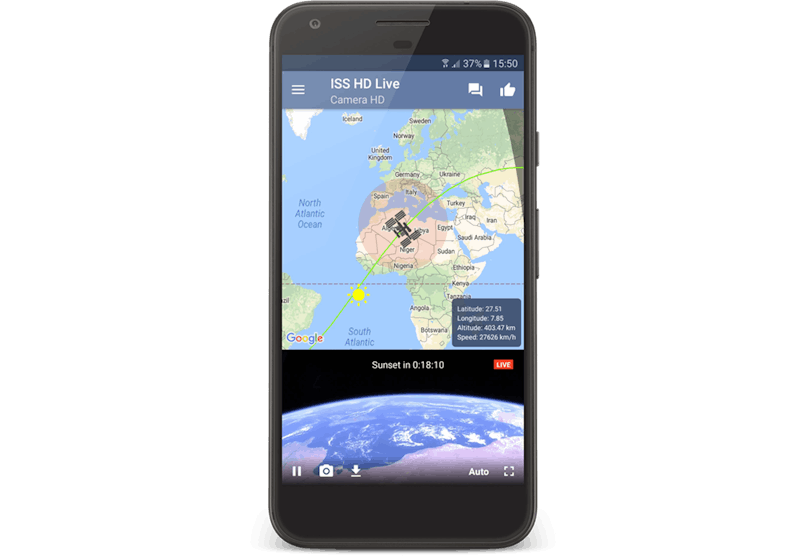
Have you always wanted to be an astronaut? Then this app is ideal for you! ISS Live Now consists of live images from the International Space Station and keeps you up to date with the astronauts' adventures 24/7.
This app summarises all of NASA's information in a handy way, keeping you up to date with the latest developments in astronomy.
The European Space Agency also has an interactive app. It includes educative games, inspiration for space-themed craftworks and of course more information about our universe.
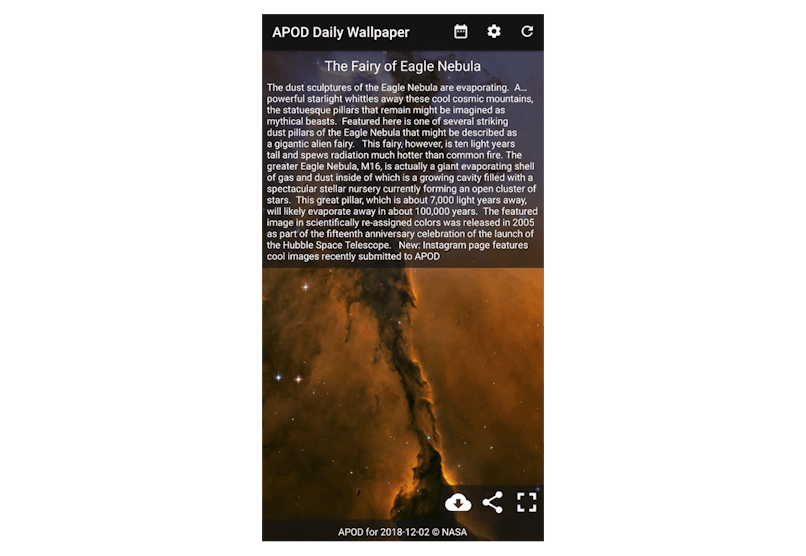
The app Daily APOD Wallpaper uses NASA's "Astronomy Picture Of the Day" to provide your smartphone with a fun background every day. The backgrounds are very diverse and range from distant nebulae to photos of our starry skies on Earth. Highly recommended!
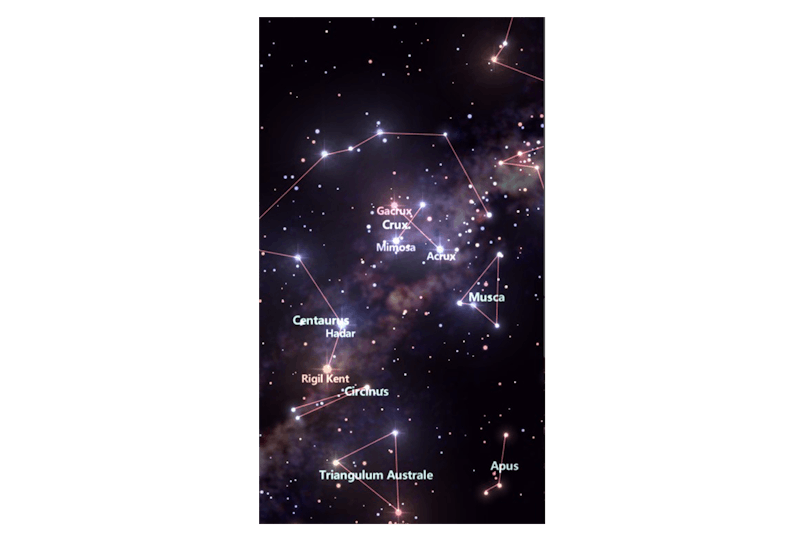
Are you fascinated by the constellations in the sky? Then this app is definitely for you! With Star Tracker, all you have to do is point your smartphone at the sky and the constellations become visible. This is the ideal way to learn the constellations. Tip: It's best to take the cover off your smartphone because it can cause problems with the calibration of the constellations.
: Often featured in solo or duo scenes within the site's European-based shoots. The "Inti" Series : This sub-brand on the AbbyWinters official site
When they arrived, the expo was a kaleidoscope of glowing installations. The centerpiece was a massive, transparent dome shaped like a nautilus shell, its surface embedded with photovoltaic cells that harvested daylight and stored it in sleek, crystal‑like batteries. abbywinters191105fernandaandnikolinainti new
“Congratulations,” the guide’s voice echoed. “You have mastered the Labyrinth of Light.” : Often featured in solo or duo scenes
There is a specific kind of bravery in being still. As the afternoon light stretches across the floor, it catches the curve of a shoulder and the steady rhythm of a shared breath. It’s in these unscripted seconds—the way a hand rests or a gaze lingers—that the masks of the everyday fall away. They aren't performing for the world; they are simply existing for each other. “Congratulations,” the guide’s voice echoed
Abby, impressed by Fernanda's farming techniques and the biodiversity of her land, proposed an idea to create a botanical garden that would serve as a living laboratory for studying rare plant species. Fernanda, seeing the potential for her farm to contribute to scientific research and environmental education, was eager to be a part of it. Nikolina, with her expertise in landscape architecture, offered to design the garden in a way that would maximize its ecological benefits and aesthetic appeal.
Emphasizing natural bodies and real chemistry between models.
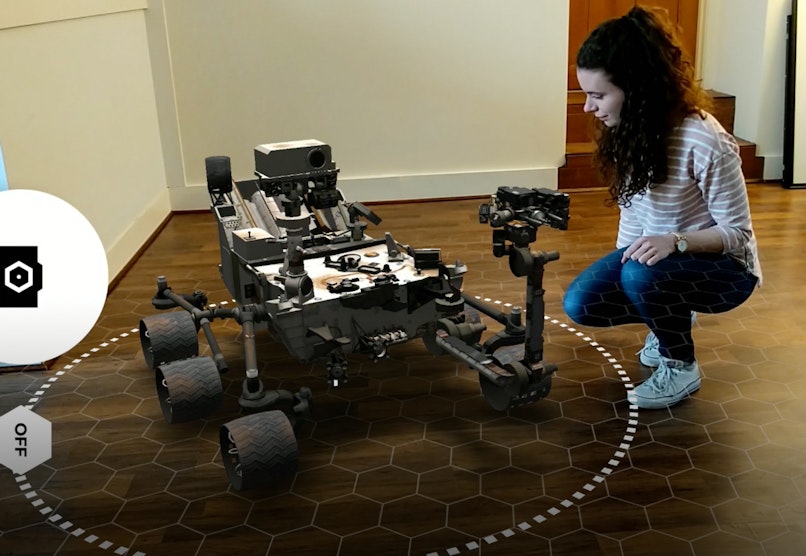
This app developed by NASA brings the rovers that were used to explore the solar system right into your living room. Spacecraft AR uses, augmented reality that allows you to view the rovers from any angle through your smartphone's camera.
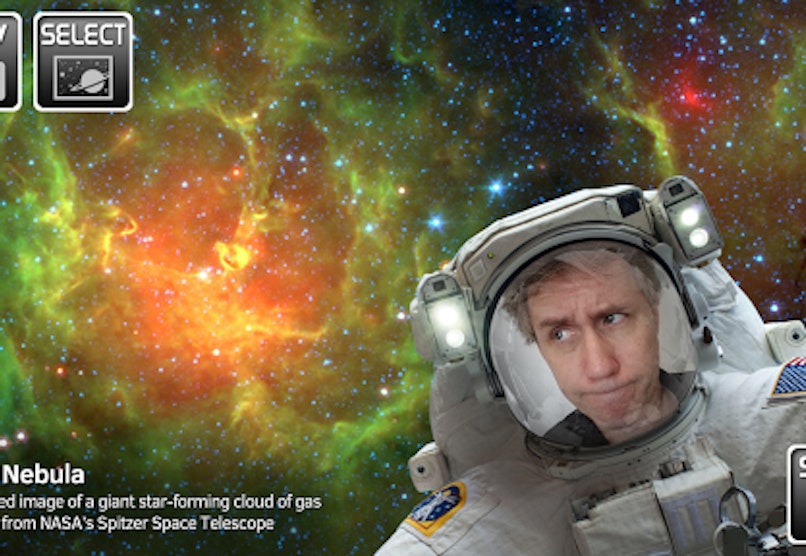
With this app from NASA, you can travel all over the universe. You can prove this to your friends with an accompanying selfie in your virtual space suit. Information is provided with the different backgrounds. This application was developed on the occasion of the 15th anniversary of the launch of NASA's Spitzer Space Telescope.
Founded in 2002 by the Nobel Prize winner Carl Wieman, the PhET Interactive Simulations Project at the University of Colorado Boulder creates free interactive simulations for science and mathematics (STEM).
Would you like to decide for yourself what happens in our universe? Then you'll definitely want to try this one out! You can create your own stars, make them collide and much more.
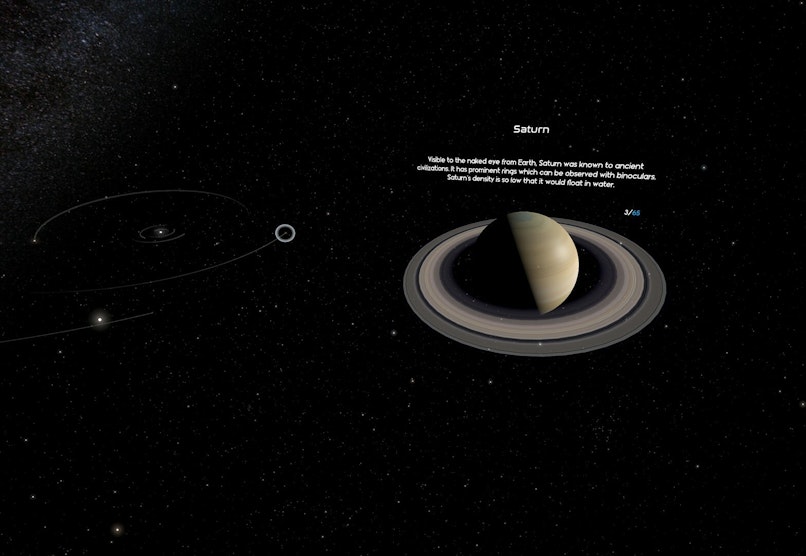
A great 3D model/mobile planetarium for exploring space. The app presents a time-sensitive simulation of our universe, showing planets, stars, satellites, dwarfs, asteroids, comets, etc. live.
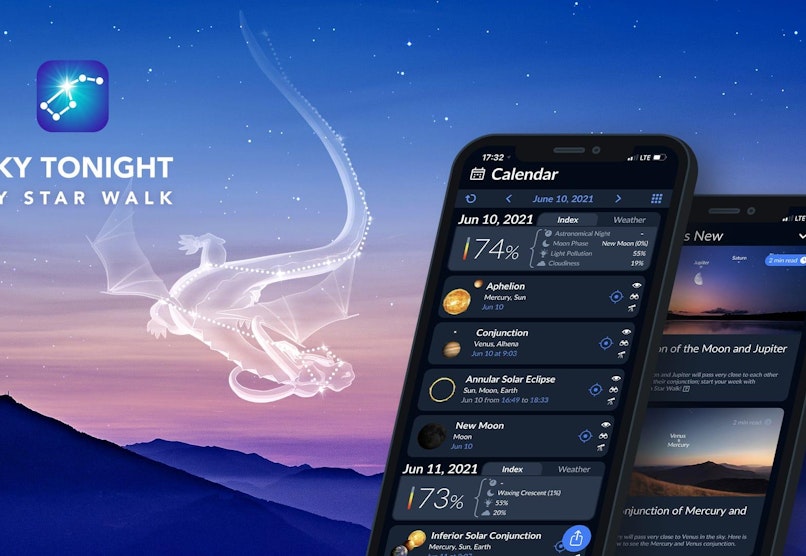
Sky Tonight is an astronomical app that helps you to explore the sky. It helps observers answer the three most common questions: 'What's that bright spot in the sky?' 'Where should I look to see something interesting above me?' and 'How can I find the object I'm interested in?'