Open source RGB lighting control that doesn't depend on manufacturer software


One of the biggest complaints about RGB is the software ecosystem surrounding it. Every manufacturer has their own app, their own brand, their own style. If you want to mix and match devices, you end up with a ton of conflicting, functionally identical apps competing for your background resources. On top of that, these apps are proprietary and Windows-only. Some even require online accounts. What if there was a way to control all of your RGB devices from a single app, on both Windows and Linux, without any nonsense? That is what OpenRGB sets out to achieve. One app to rule them all.


Version 1.0rc2, additional downloads and versions on Releases page

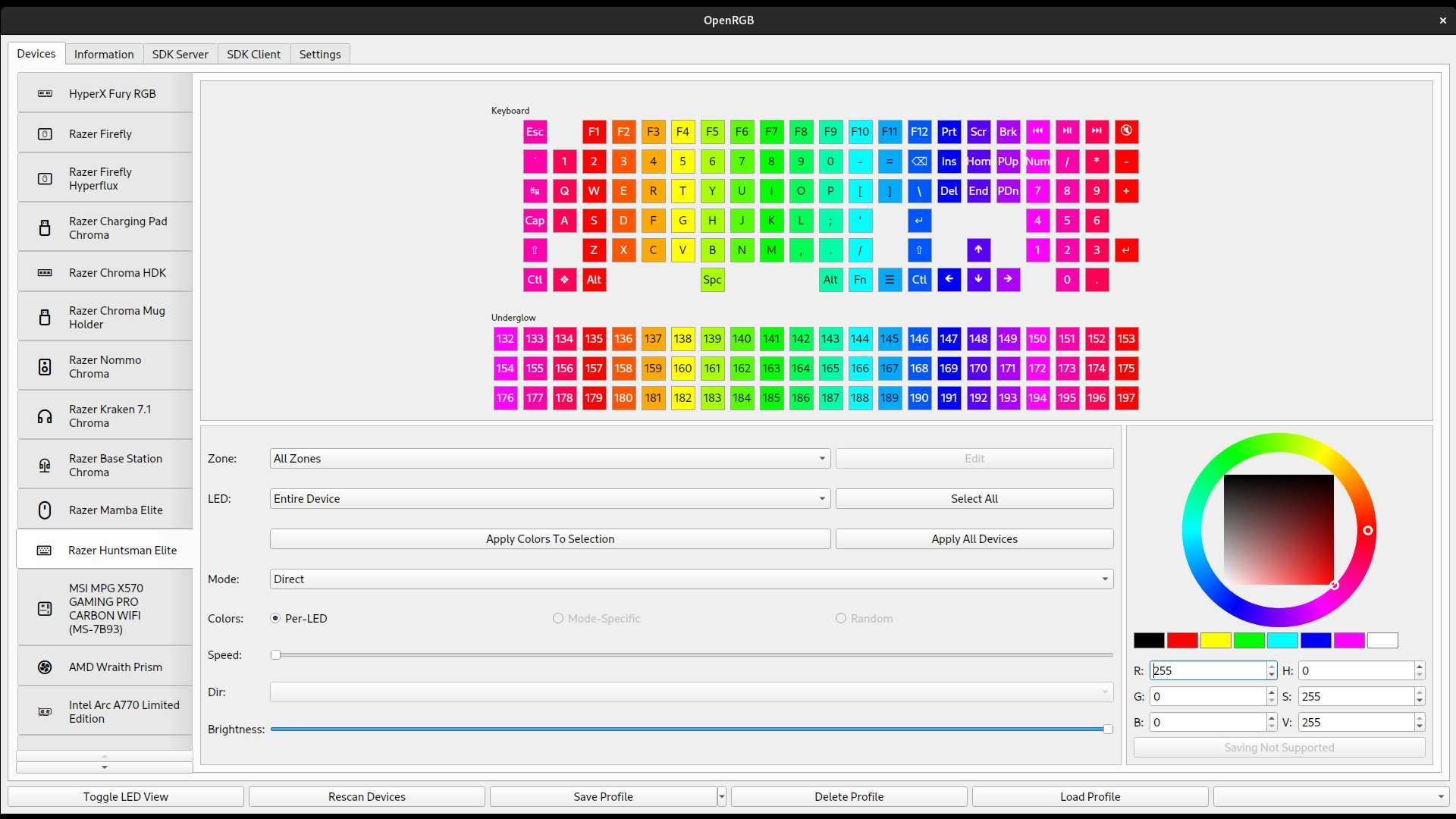
OpenRGB user interface

Control RGB without wasting system resources

Lightweight User Interface

OpenRGB keeps it simple with a lightweight user interface that doesn't waste background resources with excessive custom images and styles. It is light on both RAM and CPU usage, so your system can continue to shine without cutting into your gaming or productivity performance.
OpenRGB rules them all

Control RGB from a single app

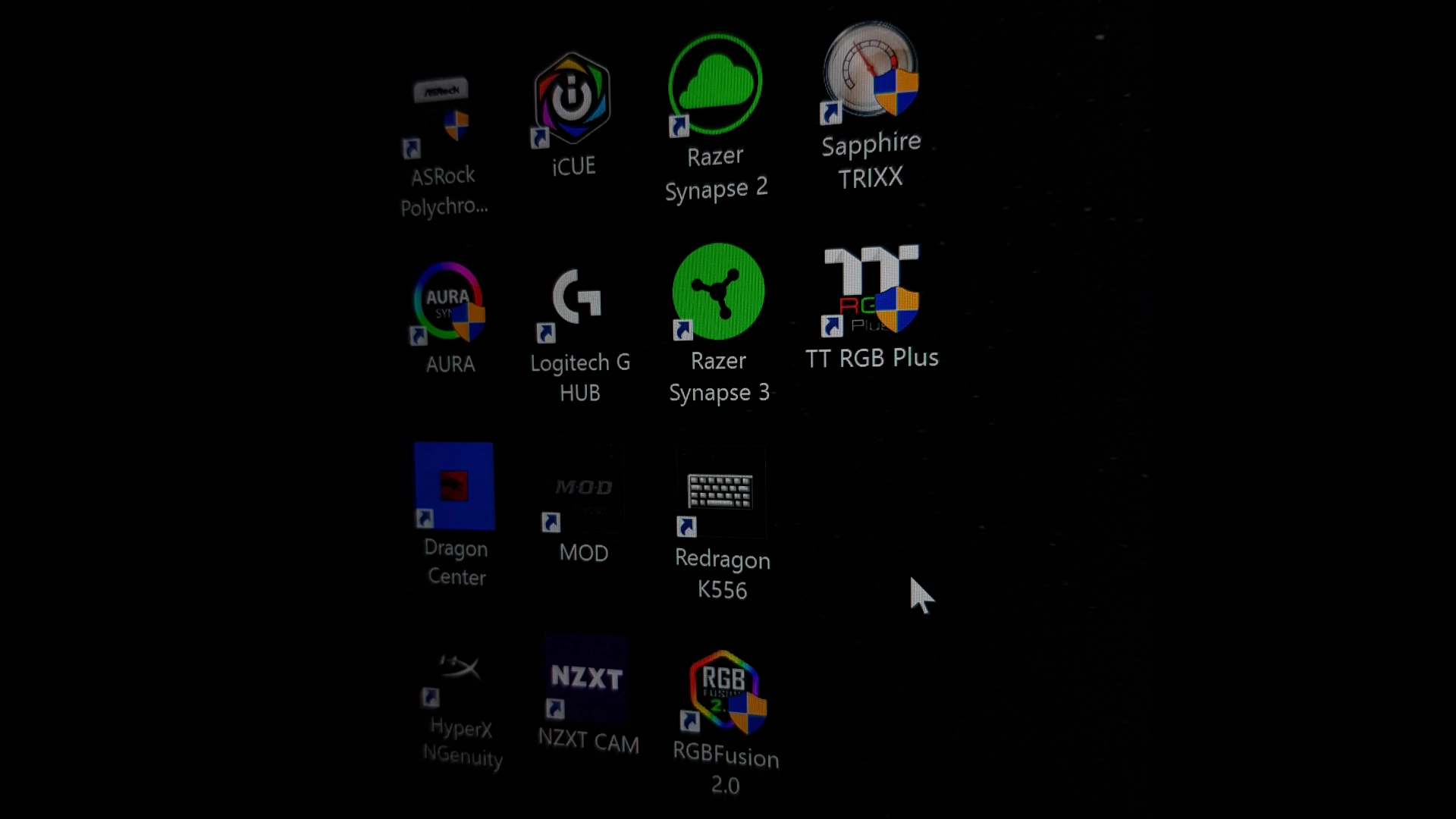
Eliminate Bloatware

If you have RGB devices from many different manufacturers, you will likely have many different programs installed to control all of your devices. These programs do not sync with each other, and they all compete for your system resources. OpenRGB aims to replace every single piece of proprietary RGB software with one lightweight app.

OpenRGB is open source software

Contribute your RGB devices

Open Source

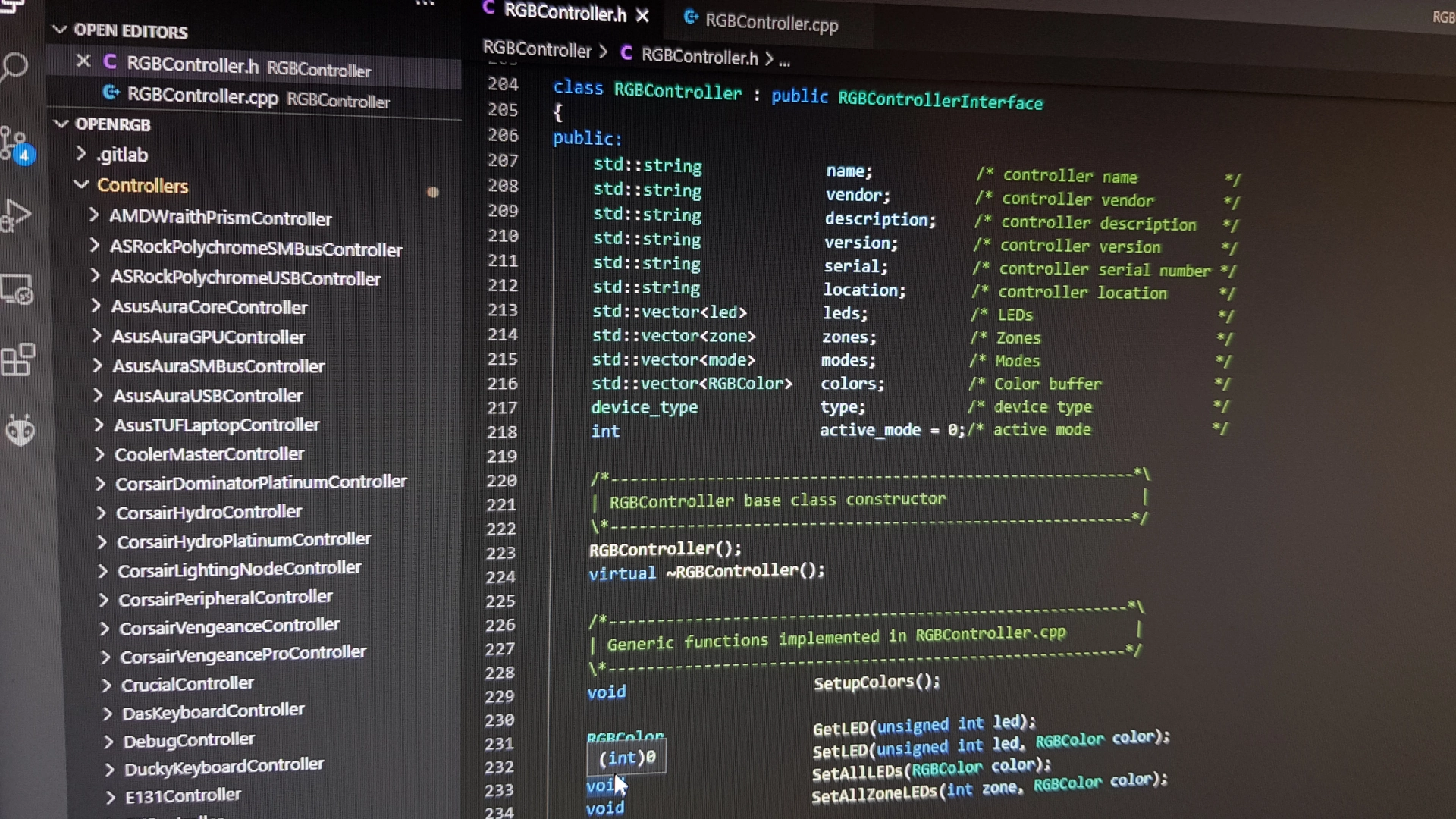
OpenRGB is free and open source software under the GNU General Public License version 2. This means anyone is free to view and modify the code. If you know C++, you can add your own device with our flexible RGB hardware abstraction layer. Being open source means more devices are constantly being added!


Check out the source code on GitLab
OpenRGB is Cross-Platform

Control RGB on Windows, Linux, and MacOS

Cross-Platform

OpenRGB runs on Windows, Linux and MacOS. No longer is RGB control a Windows-exclusive feature! OpenRGB has been tested on X86, X86_64, ARM32, and ARM64 processors including ARM mini-PCs such as the Raspberry Pi.

Tinyurl Lawatan Johor Jun 2026

In the rapidly digitizing landscape of Malaysian public services, state governments are increasingly turning to digital tools to streamline communications and disseminate information quickly. A key example of this modernization is the use of URL shortening services, such as TinyURL, for official campaigns. The phrase has surfaced as a point of interest among the public, referring to the use of shortened web links to facilitate access to information regarding official state visits, events, or aid disbursements led by the Johor State Government.

Syurga Membeli-belah: Johor Premium Outlets (JPO)Bagi peminat jenama mewah, JPO menawarkan barangan berjenama dengan harga diskaun sepanjang tahun. Ia adalah lokasi wajib singgah sebelum pulang dari lawatan anda. Tinyurl Lawatan Johor

First, the technical mechanics of the case highlight why TinyURL became a vector for potential abuse. TinyURL and similar services are designed to condense long, unwieldy web addresses into short, shareable links. However, this utility obscures the final destination. In the hypothetical "Lawatan Johor" scenario, a user might receive a text or social media message saying: “TinyURL.com/JohorVisit2024 – Look what the officials did during their trip.” Without clicking, the recipient cannot verify the content. This opacity is fertile ground for "cloaked links"—URLs that lead to manipulated images, out-of-context videos, or satirical articles presented as fact. During a high-stakes political visit (e.g., a royal or ministerial tour of Johor), such a tool could be weaponised to create a false narrative about the event’s purpose, expenditure, or conduct, thereby undermining public trust in state institutions. In the rapidly digitizing landscape of Malaysian public